An occasional blog listing the creatures that live in the arable crop, and are killed accidentally, or have to be killed, during the production of wheat...which makes bread...which is labelled 'suitable for vegetarians'. Like the poor slugs in this picture, dying a long slow death due to dehydration after ingesting the blue pellets of metaldehyde. Good thing they can't scream; no-one in the countryside would sleep.
Sunday, 16 September 2018
Bruchid beetle
This little fellow is a bruchid beetle. He and ten billion on his closest chums got into my bean crop and make a right mess of it. They drill little holes in each bean (also just visible in the picture). This means the crop is no good for human consumption, and is downgraded to animal feed. We sprayed insecticide to kill them early in the season, but the hot weather meant an enormous late flush - hence the damage. This one on my kitchen table was one of the late arrivals, and somehow survived the combine, the trailer and being bagged up for week or two, and so by the time I started cleaning up a sample of beans for germination and 'thousand grain weight' testing, he was probably feeling a bit groggy. Still, most of his chums will have perished in the field.
Monday, 10 September 2018
Flea beetles
It looks innocuous, but here I'm trying to save my oilseed rape crop. It was sown perfectly, in fabulous conditions, and had a hot rain the next day. It started to grow, but then the flea beetles arrived, and wiped the crop out. Until the ban on neonicotinoids, we could have kept them at bay with a coating on the seed itself. Now, we have to fill up the sprayer with pyrethroid insecticide, which is less than selective, and drive across the field. A lot of deaths.
Hopping to safety?
This poor little chap was trying his best to not be noticed among the stubble and straw. Luckily, we were having tea break, and were able to guide him to safety at the edge of the field. I bet many others weren't so fortunate.
Monday, 16 July 2018
Some lucky survivors
This plucky grasshopper and his curious beetle-like chum (at 2 o'clock from him) were found crawling over the combine today as we finished. They had made it out of the crop alive - unlike, I suspect, many of their companions down at ground level.
Saturday, 14 July 2018
Soon to die....
Tucked away in this web, built carefully among the ripening wheat stalks, lives a spider. The poor creature will soon be crushed to death by the combine harvester as it gathers the milling wheat, which will be shipped off to make bread. The bread will, of course, be labelled 'suitable for vegetarians'.
Sunday, 10 June 2018
Pre-harvest carnage, part one.
In the UK, it's June, and that means the milling wheat crops are facing the biggest threat of the arable year. It comes from the Orange Wheat Blossom Midge. It lays its eggs in the ears of wheat on a still, calm evening, and the emerging larvae wreck the bread-making quality of the finished crop. Farmers all over the nation are tiptoeing through their crops, counting the little orange bugs to see if they have passed the threshold for treatment.
If there are more than a certain number, out comes the cropsprayer, and a lethal insecticide is applied. The poor, innocent midges are killed.
How fortunate for the veggies that sweet little OWBM don't feature on their care radar.
Here's the Farmers Weekly alert.
If there are more than a certain number, out comes the cropsprayer, and a lethal insecticide is applied. The poor, innocent midges are killed.
How fortunate for the veggies that sweet little OWBM don't feature on their care radar.
Here's the Farmers Weekly alert.
Thursday, 10 May 2018
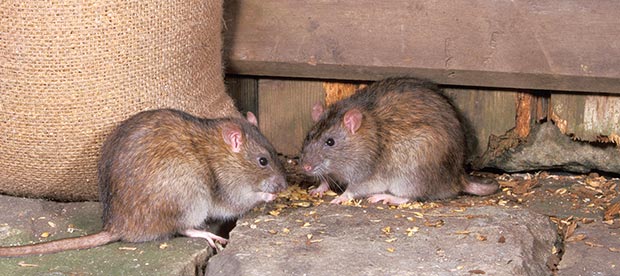
The innocent rat
For as long as Mankind had grown grain, he has had to store it. After all, harvest is only once a year.
And for as long as Mankind has had grain stores, he has battled with rats.
They get into grain stores - even the most modern and fortress-like - and gorge on the grain. They leave droppings and urine that is toxic; grain store workers have to watch out for Weil's disease. In my youth, after a long winter working in our store, I went to the doctor with what I thought was a severe flu: sneezing, headaches, red and painful eyeballs. He gave me the facts about Weil's, then the mother of all bollockings for not arriving in his surgery earlier, and then some industrial antibiotics. Luckily, not being an organic farmer, I took them, and got better.
So we have to control (i.e., kill) the humble rat. UK ACCS legislation means we have to have a complete plan in place.
But how? Poison is the most common way. Bait is left down, the rats eat it, and die. Normally slowly. If it's a warfarin-based poison, they bleed to death after any small cut. (Warfarin is an anticoagulant). We have lost many farm cats the same way, after they caught and ate affected rats.
There's trapping. Large versions of the humble mouse trap, can be effective and quick - but rats are so suspicious, they are hard to tempt into the neckbreaking loop. They're easier to persuade into a funnel trap, which has a one way entrance, but they have to be then disposed of. The classic technique is to drop the whole cage into a water trough, and drown the rat. That can take many minutes.
Then there's gassing. Most of the entrance holes are blocked, and toxic gas (back when we did it on the farm, it was Cymag, Phostoxin or even exhaust from an engine) is introduced to the remaining hole, which is then sealed. It's hard not to feel sympathy for the rat when you hear it screaming below a sealed up exit hole.
If you have a few terriers, there's 'organic' pest control: dig them out and let the dogs loose. It's brutal but quick. There's usually lots of blood, but very few survivors.
Meanwhile, the wheat that's in the grain store goes off to make bread, which is marked 'suitable for vegetarians'.
Subscribe to:
Posts (Atom)
Good morning, Britain.
An absolue gem this morning on ITV, as Piers Morgan takes on Liz Jones on veganism, and uses the wheat-production argument fairly compr...
-
The very rock of the Moral High Ground occupied by the vegetarian/vegan movement is the claim that their diet doesn't kill animals. From...
-
Ploughing the field, making it ready for a new crop. The gulls are feasting on worms, snails, slugs and small rodents that have had thei...
-
This plucky grasshopper and his curious beetle-like chum (at 2 o'clock from him) were found crawling over the combine today as we fi...